
I, like just about everyone on facebook, twitter, instagram, pinterest and every other form of social media, tend to post a lot of pictures. No real surprise that instead of kids, cats, dogs or shoes my pictures are mostly photos of cows, calves and farm life. Cats, dogs, shoes and other random photos do make the cut but it's mostly all about the cows. If you follow me on twitter and were to look back on my tweets you would see lots of bad, blurry snapshots of wet calves late at night, usually with their mother's muzzle in the frame licking the new calf off. The next morning you would see photos of a cute, dry, fluffy calf cuddled up in it's calf hutch. But i've never really posted much about what happens between the photos. So I decided to take some photos from start to finish (mostly, I thought of this idea part of the way through) and share them with you.
So here it is.... How baby calves go from wet and squishy to soft and cuddly.
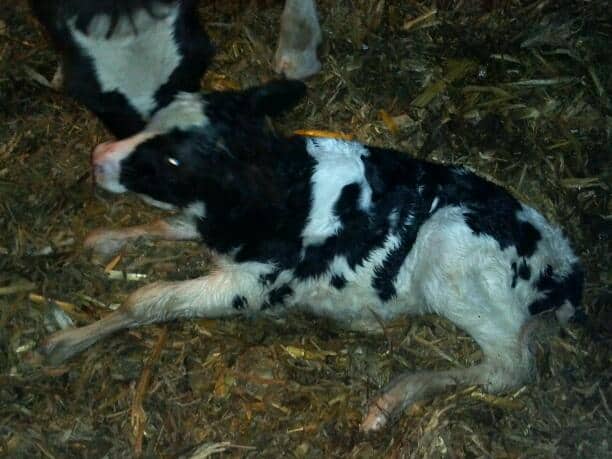
When we have a new calf born the first thing I do is make sure that the new mama gets up and shows an interest in her baby. Calves need the stimulation of their mother licking them off to get their bearings after being born. If the cow doesn't show an interest in the calf I will grab a towel and start to rub the baby dry myself. Thankfully Gentle had the instinct to lick off her calf. The second thing I do when we have a new calf born is lift up it's back leg and check the plumbing. While we do use Ultrasound to check gender of our calves before they are born sometimes we get a surprise. Gentle had a heifer (girl) calf.
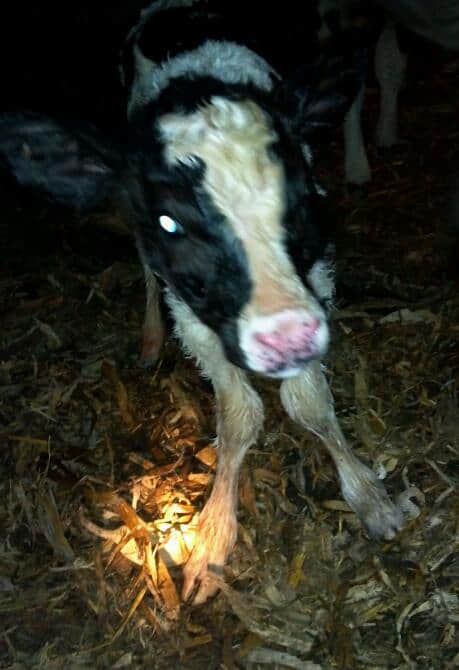
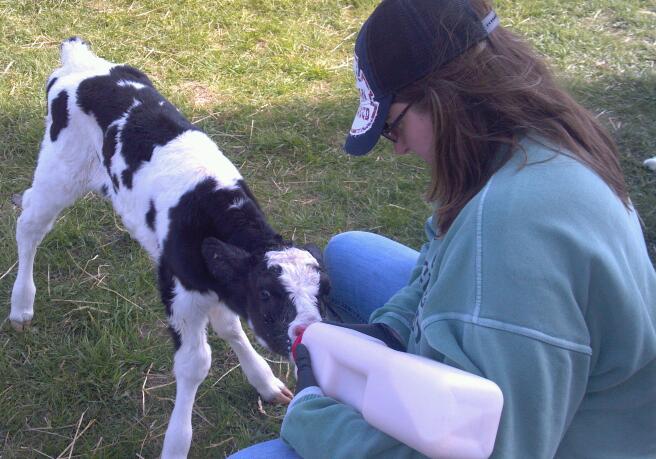
One of the most common questions I have from people about calves is why we don't keep baby calves with their mothers on a dairy farm. Or why we keep calves in those little houses and not with their moms. My answer is that we do let the mama cows lick off their babies, but after that we take over care of the calf. We do this for many reasons. The first is that our cows calve in a group pen, if you have ever been in a situation where you have a pack of baby hungry women and a newborn you can imagine what the calving pen is like after a calf is born. Often times a cow other than the one who gave birth will want to claim the new calf as her own. Some times several cows want the calf to be theirs. This usually upsets the actual mother of the calf and since cows can't use their words, a lot of pushing and head butting comes into play. The problem with this is that these cows get so caught up in wrestling that they forget that there is a brand new baby in the area and the calf can get stepped on and hurt or even killed. The second reason we take over for the cows is that just like a human newborn calves don't have much of an immune system built up yet. For the same reason that new moms refuse to hand over their precious bundle of joy to a hacking, sneezing and feverish person we do what we can to stop the spread of any bugs to the baby calf. Since no one has been able to litter box train a cow yet, manure happens and as you can imagine manure can carry said bugs. A third reason we take over and one that will resonate with any mother who has nursed her child.... Calves are born with teeth and they are sharp! When a calf is hungry they will wander up to their mother and take their cute little heads and punch their mother's udder with it to get them to let down their milk. I am not certain why a cow is designed to reward bad behavior but they are. Then the calf with start to suckle, teeth and all. While a beef cow's udder is more built for this kind of thing a dairy cow's udder just doesn't handle the abuse as well.
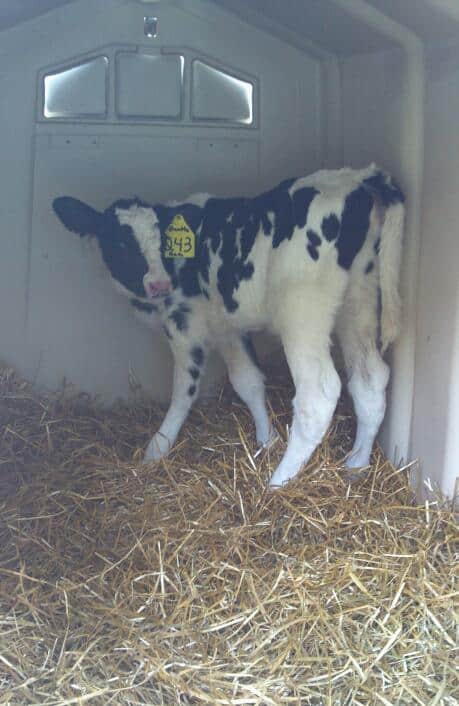
So after the calf is born and we have moved the calf to her own hutch, her mother will be milked. This milk is called colostrum, it is thick and sticky and is full of maternal antibodies that will help the new calf build a strong immune system. Before the calf is given the colostrum, on our farm, we use a product called Ecolizer. It's an oral dose of antibodies that will help her build immunity specifically to the e.coli bacteria.
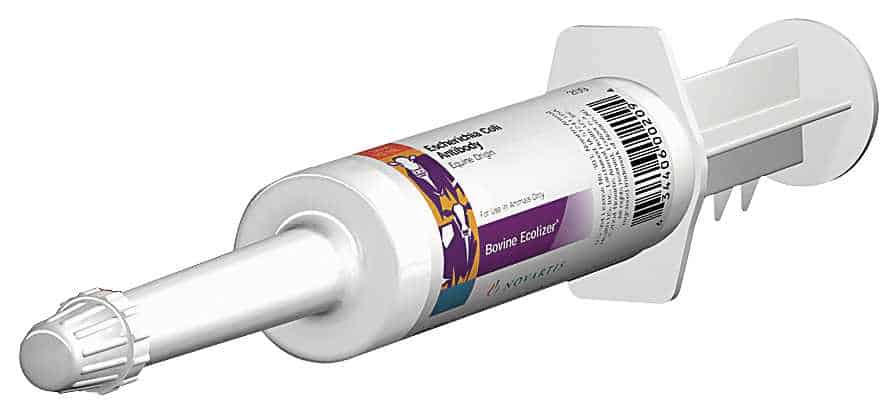
After the calf has a chance to absorb the Ecolizer, it's time to eat! Because the colostrum from the cow is so important for the calf's future we want to make sure that the calf gets at least a gallon of colostrum into their tummy in the first 12-24 hours. This is another reason why we take over from the cow. It's vital to the calf that it get enough colostrum in the right amount of time. A calf slowly loses the ability to absorb the antibodies from the colostrum every hour after the first 6 hours of it's life.
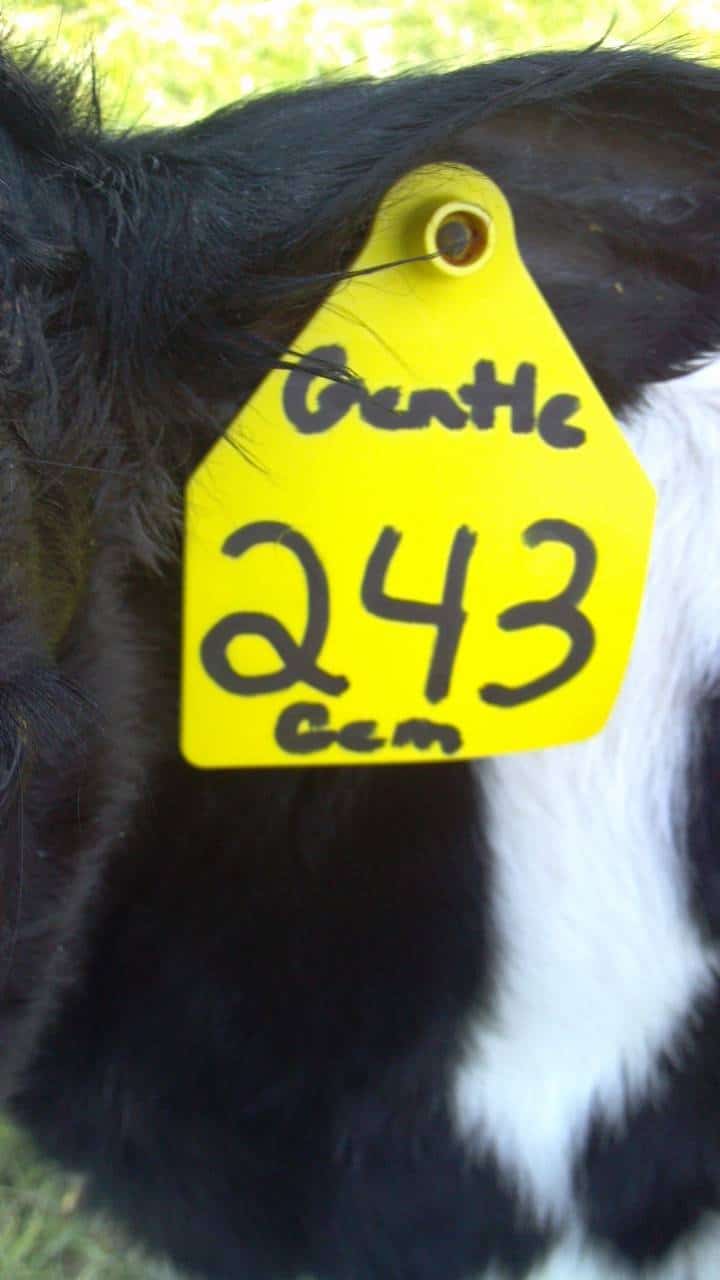
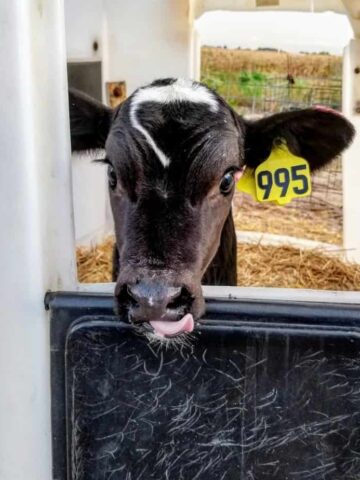
The next important step is to make sure the calf is identified. Most dairy farms use ear tags to do this. The calf is assigned a number and given a name. On our farm the calf gets a name that starts with the same letter as it's mother's name. So Gentle had....
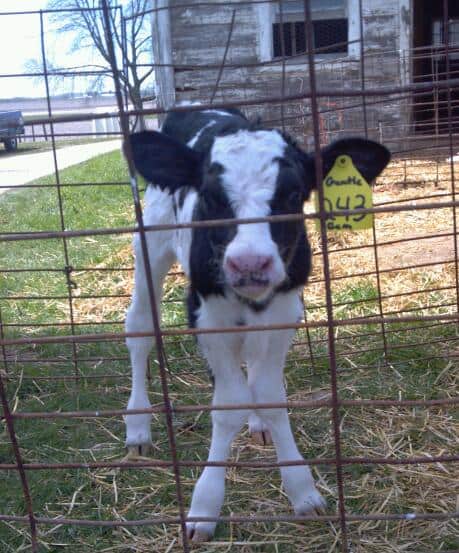
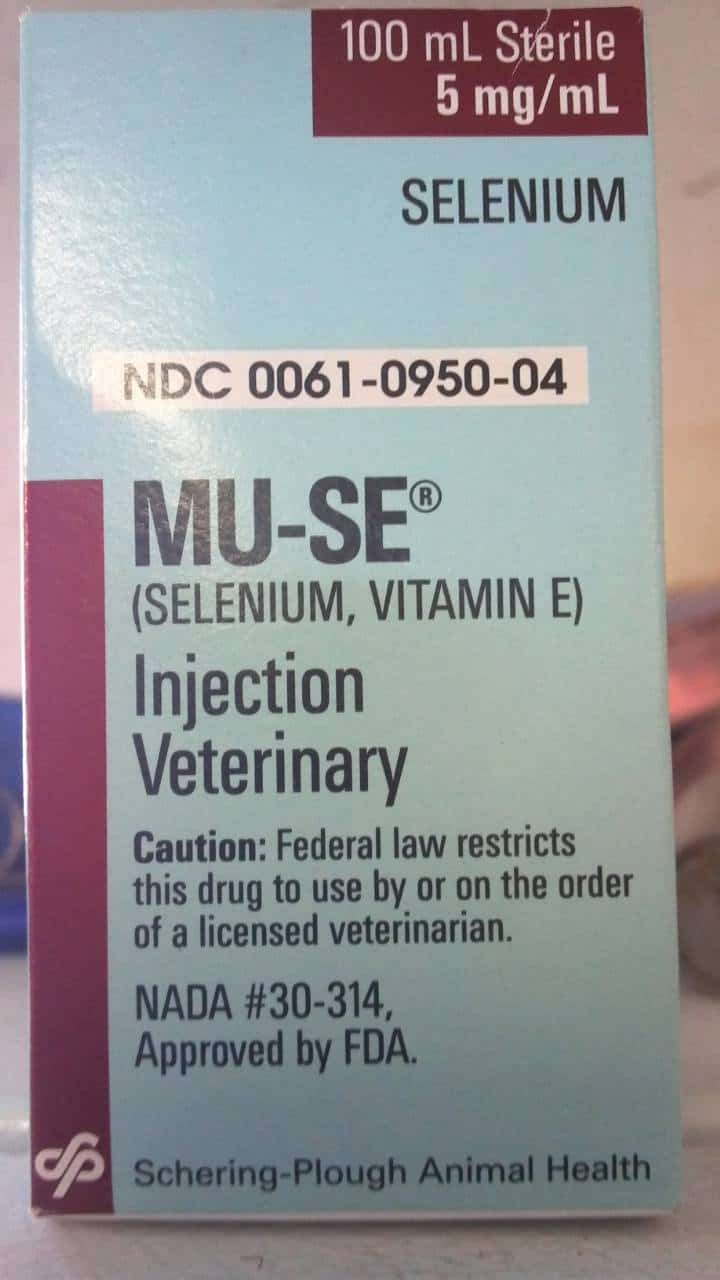
Little Gem was born with some pretty crooked legs. This is probably due to a combination of being scrunched up inside of mom and not getting enough selenium. Most areas of our country don't have to worry about getting extra selenium into their expectant mothers because the feed grown in the area contains a good amount. But here in Southern Wisconsin we have very low selenium levels and extra supplementation is needed. To help Gem get good strong legs under her I gave her a small dose of selenium.
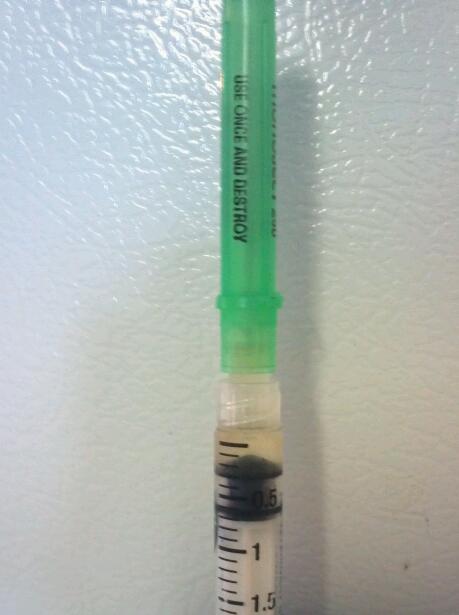
So Gem was born early Saturday morning. She is doing very well and her legs have already straightened out a great deal. Gem will live in her hutch for the next 2-3 months. We usually wean the calves off of milk at about 2 months old. They will stay in their hutch until they are ready to be moved into group housing with a few calves that are the same age and size. So the next time you see calves in hutches I hope you will have a better idea of how we care for our calves. If you have a question please leave a comment and I will do my best to answer it.
Related articles


Real Life Farm Wife
Reblogged this on Real Life Farm Wife and commented:
We don't have babies here, but you know I LOVE cows, so I had to read this excellent post from Dairy Carrie.
(Plus the baby pictures are TOO CUTE!)
dairycarrie
Hey! Thanks for sharing. Gem and her little crooked legs make for cure photos!
beth holt
I wish I could come work at your farm...luv them baby calves
Christina @ Salt Pepper Brilliant
Too cute!
Meezer3
Learned somemore new stuff from you...thanks. Do all dairy farmers keep their calves like this? And what about the boy calves...don't they get sold? And when?
dairycarrie
Most dairy farmers do, however more and more farms are building special barns just for calves where they are either housed in cubicles or in groups with automatic calf feeders.
We do sell our bull calves. We don't have the space or facilities to raise them and we thinks that for us it's better to focus all of our time, feed and resources on raising calves that will be future dairy cows. The bull calves around here usually go to farms where they are raised for beef. Some dairy farmers also raise beef but that only works if you have space to do it.
Sally Hull
So where do veal calves come from? And how long are they allowed to live before slaughter?
dairycarrie
I'm not a veal farmer so I can't give you in depth information. Some dairy bull calves do go to veal. From what I've heard it is less than 10% in the US. I belive most veal calves are around 6 months at slaughter.
Karin Peterson
Nice write up Carrie. I wish more people would spend time explaining and listening to how things work so people are not so misinformed about farming, etc.
dairycarrie
Thanks Karin. I do my best to explain what we do and why we do it. I just wish more people would seek out the information from both sides.
Judy
This sounds great, but I don’t believe that all calves has this experience. When I vacation in north ga, we often hear terrible screaming like sounds. We are told that it’s the mother cow screaming for her new baby. It is an unforgettable, pathetic, terrible sound you can’t forget.
dairycarrie
You're probably hearing beef cattle that are being weaned. Not dairy cows.
Janeatte
After seeing a post on Facebook about the abuse of dairy cows, I am happy to read that there are dairy cows that are treated kindly. Would you say most dairy farms operate in the way you do? Also, I was saddened that the mother cow essentially loses their baby after a day. Here it sounds like the baby is well taken care of, but does the mother ever see the baby again? As a mother myself, I can imagine the heartache of the mother cow who only sees her baby one day and then loses it forever.
dairycarrie
Hi Janeatte,
I would say that 99.9% of dairy farmers, regardless of size treat their cows with the same respect that I do. These cows are our livelihood and we work hard to ensure that they are healthy and well taken care of. I always hate seeing things on facebook or other places online that show abuse. Too often it sends the message that all farmers are like this. The truth is there are some parents that will abuse their kids. That doesn't mean that all or most parents abuse their kids. Same thing with applies to farmers. What I described in my post is pretty standard for a new dairy calf. A cow may see her baby again in the future, right now we have a few grandma, mother and daughters all milking in the same group. But I have never seen a cow do anything to show that she recognizes her daughter. I would say that 90% off our cows either have very little interest in their calves or after we take the calf to it's hutch, they go eat and never look back. It's hard to not think of the emotions that a cow has as the same as our own but there is a difference.
Thanks for taking the time to comment. 🙂
Janeatte
Thank you so much for your reply and honesty! I'm glad I decided to do some research on this before just going with what I saw on Facebook. What you said about there being bad parents not meaning all parents are bad is so true. I read a few other blogs and they all describe the treatment of a new dairy calf in the same way you do and show pictures of how it's done as well. I read elsewhere though that the mothers "bellow" for their babies for days and it distresses them greatly to have their calves taken away, have you ever seen this?
dairycarrie
Sure I have seen it. Every once in a while we will have a cow that does bellow and seem like it is distressed. It doesn't happen that often and it's hard to say if she is bellowing for her calf or if it's the change of being in a new group, having a full udder and just a want to let the world know that she has something to say. Beef cattle still have a lot of mothering instinct left. But most of that instinct has been bred out of dairy cows over hundreds of years.
Marianne Eaves
So this is just a part of the industry, everyone does it, and that makes it ok? So do the sad cows go to slaughter sooner? It is my understanding from reading some of your other posts that stressed animals make less milk. thanks for your comments, I really feel like I'm learning a lot from your blog, however it hasn't yet changed my mind about how inherently cruel all animal agricultural industry is.
dairycarrie
Thank you for reading.
Chronically stressed cows would produce less milk. I have not seen a drop in milk production between the cows who calve and never look back and cows that do. So to answer your question, no those cows do not go to slaughter any sooner.
marica
I really enjoyed your blog about the dairy farm,it is good to know that there are people that care about the welfare of the animals in their care,awesome!
dairycarrie
Thanks Marcia! Dairy farmers work hard to take care of our animals.
Tonya Stonehocker
Im looking for cruelty free milk butter and cheese, I live in Las Vegas,Nv. All the sights i go to seem to be scolding me for it. I dont eat red meat but I do like dairy. I want to buy the most humane products as possible. Can you help me?
dairycarrie
Hi Tonya,
Thanks for asking me! Your question makes me want to ask you all kinds of questions to better understand your view of my industry, but to try to stick with your question... It looks like Anderson Dairy is a milk bottler in your area. The milk that they bottle is going to be from farms that are fairly local to the Las Vegas area. So this may be a place to start. That being said, I believe that the milk, butter and cheese you buy at the store, regardless of labels is cruelty free. Do you have questions about dairy farming I can answer for you? Maybe you've heard something that you aren't sure about or want to know why dairy farmers do what we do?
I was down in Vegas in May and wanted to tour a dairy farm down there to see how they do things but I didn't set anything up ahead of time so I never did get a chance to visit one. Maybe next time!
Thanks again for asking me!
Carrie
bongoangola
I feel that a humanely raised certification is something the industry has really done a poor job getting behind. In the beef industry, especially at feedlots, there is the opportunity to get certifications from Temple Grandin and her group. She now has a combination sustainability and humane handling certification.
https://www.provisioneronline.com/articles/np-exclusive-temple-grandin-unveils-new-sustainability-and-humane-handling-certification-program-1
It would be a great value added to be able to show consumers that you maintain the highest standards of humane animal treatment and you are audited to ensure that the consumer can have confidence that they are buying the product that they desire.
Many people assume that you can only get sustainable and humanely produced dairy products by buying organic products. This assumption is not correct because humane treatment is not part of most Organic certification processes.
As an animal scientist with a specialty in bovine production and management, I am concerned about the welfare of all bovines used in food production and I know the industry can benefit from having true and candid information like Carrie provides in her blogs. Thanks Carrie!
Marti
How are the ear tags attached?
dairycarrie
The same as a human with an earring.
Sarah
Male dairy calves are not raised for beef (beef cattle are totally different) they are either disposed of or rasied for veal.
dairycarrie
Actually the vast majority of male dairy calves are in fact raised as steers to become beef. In the US a very small percentage go to veal because US veal consumption is so low. As far as "disposing" of the calves, that would be stupid! When we sell our bull calves we receive between $100-200 each. Why would we throw that money away?
jgauker
On our farm, we raise Holstein bull calves for beef - not veal. Bull calves are absolutely not disposed of. They are sold for beef and some may go for veal.
Laura
We have 3,600 cattle, a good chunk of which are Holstein (dairy) steers. We also have angus, but they don't get quite as large and the meat they produce does taste different (fat marbling). When we had a dairy, the bull calves were raised for beef.
Marilyn Torrey Easter
Dairycarrie, I love the way you tell the dairy story!!!!
dairycarrie
Thank you!
Lana
Yes, we understand there are good, logical reasons that you separate calves and mothers. But good reasons don't make the practice humane. The natural instinct of a lactating mammal is to care for her young (hence many cows attempt to claim the calf as their own as you have described). Separation denies the animals a very strong natural instinct. This post just demonstrates the inherent cruelty of the industry.
I'm not meaning this as personal attack by any means- I am just making an informed comment.
dairycarrie
Lana, I think you've highlighted the difference between animal rights and animal welfare nicely here. I believe that my animals deserve the best care available. I do not believe they are entitled to the same rights as humans.
Lana
Hmm..do you consider fulfilling natural instincts-including maternal instincts-to be a "right" only reserved for humans then?
Again-not trying to be antagonistic here!
dairycarrie
I don't think your being antagonistic. I believe we have different view points that we strongly believe in. I respect your choice even though I don't agree. I don't believe that if we left our calves with our cows and only milked what was left that you would decide dairy was OK. Feel free to correct me if I am wrong.
Luella Berg (@luellaberg)
Thank you for sharing. I've read only a bit of your blog at this point, and I plan to read more.
I would just like to point out a couple of things for right now. First, animal rights does not mean that we believe animals are entitled to the same rights as humans. If we did, then we would be advocating for voting rights for dogs, and that would be ridiculous. Peter Singer argued in ANIMAL LIBERATION that animals are entitled to equal consideration of interests. Nonhuman animals do not always have the same interests that human animals have. I do believe that fulfilling maternal instincts is an interest that we have in common. Many animals grieve just as humans do.
Second, there is a wide variety of opinions in the animal rights community. Some people are abolitionists, which means they believe that *any* human use of animals is exploitative and therefore wrong. Some even go so far as to claim that we should not keep companion animals like cats and dogs.
Others, like myself, believe that eliminating unnecessary suffering should be the goal. I cannot speak for Lana, but I believe that if cows were not bred so as to maximize profits while creating health problems for the cows (just as purebred cats and dogs often suffer health problems because of intensive breeding), and the calves were allowed to stay with their moms with the farmers taking only the excess milk, then dairy could potentially be humane and acceptable. Unfortunately, I know of only one small farm that allows calves to stay with their mothers, and that is only until they are weaned and then sold to be raised as beef.
I am curious, though: If that small farm came up with a way to allow calves to stay with their mothers, could you not come up with a workable way to do so, as well -- at least for the ones who express a desire to stay with their young? Could you not use small pens for individual cow and calf pairs? When a cow tries to claim another's calf as her own, could it be because she's grieving for a calf that she has lost? Could you find a different breed of cow with less sensitive udders (an example of a problem that human breeding creates for animals)?
Patti Ferretti
You could always give up eating and using dairy products. The cost of taking “what’s left,” is not worth the effort of having a dairy farm. staying up all night with a heifer who is delivering and having a hard time, vaccinating, feeding, cleaning barns and resting areas, mending fences, moving 800 pound hay bales, etc. Incidentally all cattle whether it is dairy or beef cattle eventually end up for sale as beef. whether for human consumption or otherwise. An animal is not just disposed of like they don’t matter. They are being raised for a reason and many go on to fill a need for humans. That’s why they are here.
Kelly
They are here because they happen to inhabit the same planet as us, they aren't here specifically to fill a need for humans.
dairycarrie
I understand that is your belief but I disagree.
Michelle Reusser
I agree. Cattle are not humans, dogs are not humans, sheep are not humans. Yes they can be cute and cuddly but they are not "furbabies" I can't stand that term.
Many breeds of chicken no longer go broody, which means they no longer lay on their eggs to hatch them. With the use of incubators farmers no longer need to breed chickens who care to warm their own eggs. People who like me don't want to incubate use other breeds to take over the incubation process for those mothers. Thankfully many breeds still go broody and will mother anyone's eggs, even if they aren't chicken.
If these dairy cows have been bred for hundreds of years and had their calves cared for by humans, I don't understand why we assume this is cruel? You are thinking how you as a human would feel, but they are cows, not human. Should we be up in arms when you take a puppy from its mother at 8 weeks, because as wolves they would become part of the pack? But they are no longer wolves and generally we as people take good care of our puppies do we not? As long as all animals are treated with respect, love and given the care they need to thrive, that is all we can ask.
Rich people have nannies to care for their children. Is this terrible? As long as the children get the care and love they need, it matters not who it is giving the care. Eventually teachers, daycare providers, coaches, etc will take over at times. This doesn't constitute a bad upbringing.
I'm sorry, yet i'm not, but I eat meat, I consume dairy products. I would love nothing more than to homestead so I could handle them all myself from start to finish. To know what they eat. What medications they had and how much quality of life they live. However it isn't realistic to expect big dairies to require grazing their animals daily when they have so many. To keep their bulls when they don't have the room or time to deal with beef cattle. If you want it done a "special" way, get off your butt and do it yourself. No magical fairy gives us all a life of luxury. But it isn't fair to brand all farmers as cruel when their animals are their bred and butter. They would be foolish to abuse them. Profits would be affected by neglect or abuse. If you still don't like how it's done. Shut up and do it yourself. Put up or shut up as they say.
Or don't eat meat, don't own pets, don't wear leather or buy a car with leather seats, couches, jello, pudding, glue, make-up or most of the things in a person's life that use animal products and bi-products. Be bitter and hate the world. Whatever floats your boat.
Ashley
Hi! They sell vegan makeup at LaRitzy and VegCuts ( find them on facebook). Amazon offers many vegan makeup brands- Lime Crime and Ella+Mila are two of my favorites! Where there's a will, there's a way.
Clare Lexi Jukes
You Michelle are incredibly rude.
Kimberly
I would actually be ok with the milk that is left after the calf has nursed and came upon your blog searching for a dairy that does not separate calf and mother.
I didn't know until recently that calfs were given "milk replacement"....which is like baby formula, right?
I guess I find it hard to believe that these animals aren't the least distressed from their young taken away from them. I love me some milk! Cheese is GOOD - but I just can't bring myself to eat it now knowing about the seperation practices. I understand that you do treat your animals well and keep them healthy - but you've never once stopped to think about the distress this puts on both mothe and calf?
dairycarrie
Hi Kimberly, you caught me up late tonight! 😉
I do think about the cows and the calves and how splitting them up might feel. Here is what I see most often... a cow has a calf and licks him or her off. We bring in her Gatorade she drinks it and then we take her in to be milked and she never even looks back to where the baby was. Some cows are different in that they do look for their baby and are upset and some cows have a calf and never even look at it. Unlike beef cattle a lot of the maternal instinct has slowly been bred out of dairy cows. When we look at which dairy bull to use maternal instinct isn't even a parameter they include whereas on beef mothering ability is considered. Yes we do have a few cows that are very upset for a few days after we takeover care of their calf but the vast majority don't seem to notice.
dairycarrie
Oh and to answer your question, milk replacer is kind of like formula. Many dairy farms use a milk pasteurizer and feed milk to their calves instead of replacer.
Lana
hi!
i've read that red blood proteins are used in milk replacement formulas-and understandably, it was ...creepy. Here's one article: https://calfnotes.com/pdffiles/CN049.pdf
Does this still happen? Could you give your opinion on it?
dairycarrie
Hey, sorry for the delay I wanted to look further into this before I answered. Yes, from what I have found out, some milk replacers are available on the market with a portion of their protein derived from serum and a few use red blood cell protein. Many milk replacers don't contain either and derive their protein from milk or soy. I don't really equate either of these things as being added to milk replacer as the same as blood being added, which is what I think you might be thinking of as creepy. I guess in my mind I think of it as milk has serum (whey) in it, so is there a difference in adding serum to it? Not really. Off the top of my head I don't know of a specific milk replacer brand that uses these types of protein and after searching the most common types of milk replacer I see on farms including the brand we use, it doesn't look like any of them use these types of protein. Additionally with milk replacer costing more than $70 a bag I know a lot of farms, ours included, are looking at installing milk pasteurizers as a more economical and better for our calves alternative to using milk replacer.
Here is a good link that breaks down the protein content of milk and how that breaks down even further. https://www.milkfacts.info/Milk%20Composition/Protein.htm
Lana
thanks for the detailed reply! it was something i always wanted to know more about, i'm sure you can understand why i was creeped out by it when i first heard about it.
Everything Dairy
Just want to put my two cents in because I based part of my masters thesis on this! Serum in milk replacers typically only is no more than 5% of the entire protein amount, because of the expense! However, studies show that the added benefits (less scouring, healthier animals, fewer deaths) bring great reward for the babies! Milk protein is expensive right now for human demand, so using alternatives that can help the baby are a great way to promote their health! I did a lot of work with “functional foods” – ingredients that provide nutrition, but also give an extra benefit to calf health or digestion, it is sure fascinating!
Bec
I'm not sure about the US guys but we have a disease here called Johnes. It is a disease that calves pick up and show no symptoms for a couple of years but they still shed it & spread to their herd mates. Once they do start showing symptoms they waste away before your eyes regardless of what you do for them, there is no cure.
The only way we know to prevent/minimise the spread is to keep all animals under 2 years old completely separate from the cows. Here housing animals is unusual as our climate is pretty good so we have to keep separate grazing for young stock to the mature animals. We can't even use the same laneways or yards for the youngsters as the main spread is through manure but it will live in the soil.
I know to many it seems cruel but Johnes is one of the many nasties that we can't prevent without doing this.
Dairy lover Averie
It isn't stressful. The cow I used to have didn't even know what happened to her calf. We had to move the calf because she was in our way and we struggled to get the colostrum from the cow to the calf. Also the heifer had to rest. They were so exhausted. The cow wouldn't know what to do and might have rejected the calf her milk or would not let her milk down.
Tammy Tolan Rudd
I live in PA in an area with a number of dairy farms within walking distance. One time I was walking my dog past a farm and there was a very young calf outside the fence, beside the road.
It proceeded to walk across the road and stand outside a fenced area which had adult cows, or at least cows which were not newborns, my guess was they were either weanlings or yearlings (that is what we would call them in the horse world).
Anyway, as I walked a little further I came across a man who worked on the farm. I asked him if he knew there was a calf outside the fence and he said "oh yeah, it was just born this morning, is it outside again?" and I took that to mean he had no concern that is was loose and wandering around.
I've wondered about why this would be and when I just now came upon your blog I thought you might be able to answer the question as to why it was allowed to just wander around like that.
Laura
I can speak a little from our experience on my family's farm. I think you may have perceived the farmer didn't care about this particular calf (in fact maybe he didn't, which would be unusual). I can assure you that he probably did, but something like this happening is par for the course. Calves and even grown cattle just get out. They break a fence or pop open a gate and it happens! Sometimes, at the worst of times, in the middle of the night and through a corn field nonetheless! I'm sure the farmer just wasn't surprised. He also probably knew the baby wasn't going anywhere fast so he didn't have to rush as cattle are herd animals and they tend to stick together, especially babies to their mothers. 🙂
Ash Ash (@anteatervodka)
How often do you have to breed the cows? I recently read about a native group of people in South America where grandmothers could nurse their grandchildren years after giving birth. Is it the same way for cows or do they have to be bred more often?
dairycarrie
A cow has a calf every year just as she would in nature.
Ash Ash (@anteatervodka)
Thanks! I love milk and I've always been curious about how dairy farms work, but I've only been around beef cattle. I'm really glad to see that you take such good care of your cows!
Debbie O'Neil
Thanks for the info. Never new why you took over the care for your babies. We raise beef cattle mostly for show so we spend a lot of time with our calves and cows. Every year waiting for the new calves is like Christmas for me.
Emily Batenhorst Wieck
How do you manage and what do y'all use for scour troubles?
dairycarrie
It depends on what we decide the cause of the scours is. Any calf with scours gets electrolyte feedings. A calf that has a temp and looks depressed gets an antibiotic and some aspirin.
rca
Why don't you just let the mother give birth privately so that she can stay with her baby longer?
Joanné
"Beef cattle still have a lot of mothering instinct left. But most of that instinct has been bred out of dairy cows over hundreds of years." -How on earth can mothering instinct be bred out?? And in the post you say that cows fight over a calf.....Of course they will!! Their calves were taken away from them their whole lives. So you just give them time to bond the first 5 minutes, then you take the calf away because it will get sick? You make it sound like "YOU" are the reason that calf survives... If Gentle and Gem were out in the field, I'm pretty sure both would have survived fine. Human mom's nipples also bleed and tare when her infant drinks, its natural!! If you carry your baby for 9 months and 5 minutes after birth someone takes your baby away (that you've bonded with for over 9 months)..will you be heartbroken?? Just because an animal cant speak doesn't mean they don't have the same feelings as you do! And NO not all farms are like yours. How will you manage to do THIS with 500 dairy cows or more? Between animal welfare and profit, we all know what most farmers will choose.
~Agricultural student and dairy farm worker
dairycarrie
Joanne,
Go out into a 1,000 acre pasture of beef cows and see what happens when you try to touch one of their calves. Report back if you're able.
7,000 years ago when people started milking cows, the cows that tried to kill the humans when they got near them did not get milked. The cows who weren't protective of their calves are the ones who were milked and those traits were passed on. When a farmer looks at selecting a beef bull to breed their cows to, mothering ability is a factor. If you're working on a dairy farm please go find your nearest AI company catalog and find the mothering ability score. Report back what you find.
The protocol I follow for caring for our calves is actually something I learned in part from a dairy farm that milks a few thousand cows. Maybe you should spend some time on a large dairy to see how they do things. Report back here when you're done.
If you're actually a dairy farm worker you know that there are plenty of heifers and even cows that calve in that don't bother to even lick their calf off. But considering your disdain for the dairy industry I have to wonder if you do actually work on a farm? And if you do, why you would choose to do so?
Sorry to give you so much homework but I'm kind of worried about your agriculture school education if you haven't learned about these things yet.
Donna
Loved reading this! I need a little help please. My husband and I each had dairy cows as children, that many years ago. We have hoped to have our own family milker for a while, and this weekend, our plans will finally come to fruition! But we don't remember EVERYtHING needed to care for a sweet baby.
We're purchasing a jersey heifer from a dairy which is at full capacity. She is under a week old, and has been fed colostrum. I'm thinking she'll need to be dewormed when we get her? I'm not really sure what else we need to immediately do to keep her healthy. Also, do you recommended warmed raw milk or milk replacer? I only remember using replacer.
Barbara
Your explanation of why dairy cows are more likely to lack mothering instinct makes sense. Dogs were bred from wolves and the ones that lacked the instinct to be afraid or to lash out at humans were the ones who were bred and domesticated. "Unnatural" selection would be a descriptive term. Thanks for your blog and a view from the other side.
After crying my eyes out last night after watching a video of a mother and her calf separated, in which the mother actually tries to block the farmer and then chases his van through the field, reading your side of the story helps balance it a bit.
A question does come to mind, however. Do many of these cows behave this way (lack of interest in the calf) even after the first birth or could the lack of interest be a symptom of having previous calves taken in mothers who have given birth previously?
Also, how different is the amount of milk taken from the mother by the farmer vs. what she would produce in a natural situation if left to nurse her calf? Thinking from a human perspective, I know that we can nurse for years but I'm guessing the quality and amount go down with time. It is said this is hard on their bodies, but humans seem to do fine with one of even two nursing as long as caloric intake is increased. There must be a limit to how much a cow can produce no matter how much you milk her. I'm sure there's a graph for that one. Thanks!
Elly
Just had to make a quick point here, modern dairy cows can produce between 30-80 lbs. of milk in a single day. this has been achieved through breeding and genetic selection. no calf can consume that amount of milk in a day, their stomachs are not large enough for it.
while this would further the question as to why we cannot leave the calf and take the remainder, part of the reason calves are not left are to reduce instances of mammary infections- such as mastitis- and to help the cow maintain her ability to produce large quantities of milk. In the event that a cow does get mastitis, they are given antibiotics to fight the infection and the milk is dumped. allowing calves to nurse increases the chance of mastitis, therefore possibly increasing the amount of excess milk that would need to be dumped.
It would also be dangerous (and time consuming) for the calf to remain in the general herd during milking time. They could get trampled or separated from their mother as the cows move to the milking parlor. not to mention becoming an adorable distraction for the person who is milking, if they happen to make it that far with out getting hurt or separated.
Bragi
This is abuse no matter how you spin it. We have no authority to remove babies from mothers regardless of species. They are not ours to use as we please. This is a form or arrogance that is immoral and despicable.
Linda moles
Where do the calves go after two months?
dairycarrie
After they move out of their hutches they go into small groups with other calves their age. As they grow they move into groups based on age and size.
Pam
How much and how often do you feed the calves until weaned I'm stressing with this new baby please help!!!
dairycarrie
We feed our calves 3qts of milk twice a day and they have free choice water and grain after the first week.
Pam
Thank you so much for the information especially after I read more of the comments ppl post that are critical to your operation it makes me appreciate your advise even more God bless you and your babies your nursing and nurturing and keep spreading knowledge there are always critics thanks for tolerating and moving forward you are a blessing to many
D Spencer
"The Covenant of the Rainbow
…2"The fear of you and the terror of you will be on every beast of the earth and on every bird of the sky; with everything that creeps on the ground, and all the fish of the sea, into your hand they are given. 3"Every moving thing that is alive shall be food for you; I give all to you, as I gave the green plant. 4"Only you shall not eat flesh with its life, that is, its blood.…" what I think is that we were given the animals of the earth by God, to EAT, if that should be our desire. if people don't want to eat beef, or eat cheese. or eat bacon for that matter, that is their choice. but... the bible says that I was given the right to eat anything on this earth, including plants AND animals. except blood, which I really have no desire to eat.
Nick
Humans, or any other animal, have rights based upon power. If we have the power to do something, and can agree upon the behavior, then it becomes a right... Social agreements are made so that we can live in relative peace and harmony with each other, and we call those human rights.
The agreements are made by human hands. The entitlement to behaviors known as rights are just that... Entitlements. The green light to behave in a certain way. These are human rights. Even other animals are experiencing human rights. Animal rights are entitelements given to humans to interact with other animals in a certain way. Animal rights are human rights.
What animals do have is inherited life, just as humans do. Man is not the only inheritor of bones, hearts, lungs, blood, a need for air, senses of touch/sight/smell/taste/hearing, the sensations of play, of frustrating, of hunger, of relaxing with the sun on our skin. Animals have a similar inheritance as humans...they just lack the power to label their behavior as "right(s)".
Liz
Why don't you put the mother and baby together in a separate pen instead of in the group? Then they wouldnt have to be separated. I read what you wrote and I get it but it Makes me sad that the babies are taken away right after being born
dairycarrie
Penning a cow and calf together away from other animals only solves the problem of another cow stepping on the calf. It won't help keep the calf healthy or make sure it gets the colostrum it needs.
Emily
Once a cow has a baby and starts making milk, will they always make milk?
dairycarrie
No, on a dairy farm we stop milking cows about 2 months before they have their next calf. This period of time is called the dry period and during this time the cow is fed a special diet formulated for her and the calf she is carrying. Once she calves, we start milking her again. A dairy cow has 1 calf a year on a farm, just as she would in nature.
Angela
Hi Dairycarrie, I am reading through your blog posts with much interest. I am so glad to be learning about dairy cattle through your posts. As I said in other comments, I work/help at a small, 20 head goat dairy, so I can relate to some of the management practices you describe.
These dairy goats, as I would imagine with dairy cows, are creatures we have developed to suit our purposes. Their lives and well-being are now permanently linked to their human carers.
The first two years I worked with my friend, we pulled the kids immediately, no licking even, in order to avoid transmission of the CAE retro virus that her does carried. We bottle fed those babies heated colostrum and pasteurized the milk. What a project. It was all by hand for those first couple of weeks then the kid goats could be trained to feed off a bucket feeder.
And yes, like you said, some of the mama goats stay emotionally attached to their kids a bit longer or stronger, but the highest percentage of them exhibit more happiness to be back in their big group pen with their "friends" and go up on that stand and get milked. From what I can tell, they love their work.
We do feed the kid goats mama milk, not too much replacer. Since my friend makes cheese and only has a couple of us helpers, it usually works out that she doesn't have time to get in the cheese room until kidding is mostly over anyhow, so the milk is better going to the kids anyhow.
In my own herd and flock, even though mine aren't dairy and I breed for easy births and mothering, I STILL make sure to be present for births when I can. When I know a mama is due for lambing or kidding, they are put in the birthing shed where I've done my best to eliminate drafts and hazards.
Field births are NOT the pretty, happy events that we would hope for. Mortality percentages go way up with no human supervision. That doesn't mean a human has to help every single time but those times when mama does need help, it's sure good to be there.
I still wonder about the calf hutches I guess. In the goat dairy, the kid goats are penned together in large pens sorted by age and gender. Is this practice of separating calves like this another disease concern? No judgment, just curious.
Thanks for sharing in your posts. It's really wonderful to learn about a different type of dairy operation.
dairycarrie
Hey Angela, sorry I hadn't answered on your other comment I've been traveling and haven't had a chance to get back to you.
So to answer your question, the reason we keep calves separated from each other is because their immune systems aren't really developed enough to handle the bugs that can be spread around in group settings. Calves are born with naive immune systems and they really get their best start by being separated for the first month or two.
Some dairy farms do group calves, and it seems to work ok for them but for us, it hasn't worked well.
Jacquie
You had me up until the teeth. You see when I was a kid we had cows and sometimes there would be a calf who's Mom either died or was rejected. Then it would be my job to get the calf to suck my finger while holding my hand in milk at the bottom of a bucket. Once they learned this then we could get them to take a bottle or a new Mom. Getting tossed around or kicked were the only hazards. If calves could bite well, I would have been in trouble.
dairycarrie
It's not so much biting that hurts. Those bottom teeth are razor sharp. Maybe you're forgetting the bloody knuckles that often come with pail training a calf.
Tina
I think you've tried to put a pretty spin on an ugly industry. I read each post and each response. When a 'farm' grows so large that practices have to become what you are describing it's wrong in my opinion. Humane and responsible animal husbandry flew out the window long ago for the sake of the almighty dollar. We do eat beef and we do eat cheese in this house, but only local grown grass fed beef where the calves are raised by their own mothers. And if a calf happens to come along that has to be hand raised it is done with the utmost love and care. The cheeses we choose to eat are also locally made, the farms open to the public so that we can see the love and care that goes into the animals that provide the milk. Every step in the process can be seen from the milking to the finished cheeses. These animals aren't loaded up with garbage to keep them 'safe'. They are raised in a humane and manageable way. Rather, I should say, they raise themselves as nature intended with the farmers to oversee the process. The difference I suppose is in the mindset of the farmers. These local farmers aren't out to produce vast quantities to sell to people who don't care about what goes in to the products they are consuming. They love and respect every animal from birth until it's death, whether it has died from old age or at a younger age as food to feed families who consciously choose to support practices they themselves believe in. More and more people do care about the foods they consume. Many just like to shout about the cruelty and then stop consuming the products they are shouting about. I believe in being a bit more proactive and for me that means supporting the farms that give the very best to their animals and the products they are selling.
Anne
Why would you keep the mothers together when they calf? They should get peace and quiet for this. I grew up on a meat am in Norway and unless the cows where all outside in really large areas and were able to leave the group to calf, we would always separate them fwhen they gave sign of getting close to going into labour. Having them in a group pen for the calfing seems to me a poor argument for separating the calf from the mother. Why not separate the mother and the calf from the rest for the first few days instead?
Missy
How often and for how long are the calves our of their hutches during the 2-3 months they are in them?
sjsweeney1115
Thank you for this lesson in dairy cows! My FarmerHoney has a small herd of Black Angus but I've wondered about the hutches I've seen on dairy farms. Oh - we were at a livestock auction and a four day old Holstein calf was being sold. Why?
victorialovesbees
Dairy Carrie, I have been purchasing yogurt from Maple Hill Farms. Dharma Lea Farm supplies them and they use the Madre Method of nursing the calves. Each calf nurses from her mother for ten months!! I love it. Check out https://dharmalea.com/madre-method-of-calf-rearing/. It is financially feasible, too!
I haven't been drinking milk because I can't stand the idea of not sharing cow's milk with baby cows!! Anyway, I'm finally getting my dairy again…3-4 cups of yogurt per day!
moggie
After reading through most of the "pap" and "sugar-coating" on this blog, I find your post refreshing. This whole blog is a perfect example of dissonance, and telling people what they think they want to hear, ("calf hutches vs veal crates*) and the end goal is $$, no matter how much cruelty is involved.
Thank you for the link to the Dharma Lea Farms. I've just had time to skim through it and will read it more thoroughly when things slow down around here. Very interesting. I'm interested to read DairyCarrie's opinion of the Madre Method.
There are parts that I don't understand, eg: their cull rate. "Cull rate is a function of the number of lactations we get from our cows (i.e. two lactations means each cow must be replaced every two years, or half the herd a year, or a 50% cull rate)." Does that mean that every cow is only kept for 2 years, and then sold? Further investigation is warranted.
However, the end result for all these cows/calves is still the slaughterhouse. But at the very least, this dairy seems to have a lot more consideration and compassion for the animals they raise than 98% of other dairies I've seen. Well done, Dharma Lea! I will share this info with others.
Sharon Childers
Carrie, you are awesome & said this so eloquently. We all need to see & consider other’s perspectives. No one person has the right to speak for everyone. I’m very proud of you & what you do for others. Please continue you journey & efforts to educate & provide for the children. May God bless you & your family.